
Chromite sand is a highly specialized, premium foundry sand primarily used in demanding steel casting applications where superior performance justifies its higher cost and handling complexities.
| PHYSICAL PROPERTIES(TYPICAL) | AVERAGE CHEMICAL COMPOSITION(TYPICAL) | ||
| PH | 7-9 | Cr2O3 | ≥46.0% |
| Color | Black | SiO2 | ≤1.0% |
| Acid Amount | ≤2m | Fe2O3 | ≤28.5% |
| Soil% | ≤0.1 | CaO | ≤0.30% |
| Bulk Density | 2.5-3.0g/cm3 | MgO | ≤10.0% |
| Specific Gravity | 4.0-4.8g/cm3 | Al2O3 | ≤15.5% |
| Moisture | ≤0.1% | P | ≤0.003% |
| Sintered temperature | ≥1800℃ | S | ≤0.003% |
| Free Acid | 0 | Cr/Fe | 1.55:1 |
| Filling density | 2.6g/cm3 | ||
| Melting temperature | ≥2180℃ | ||
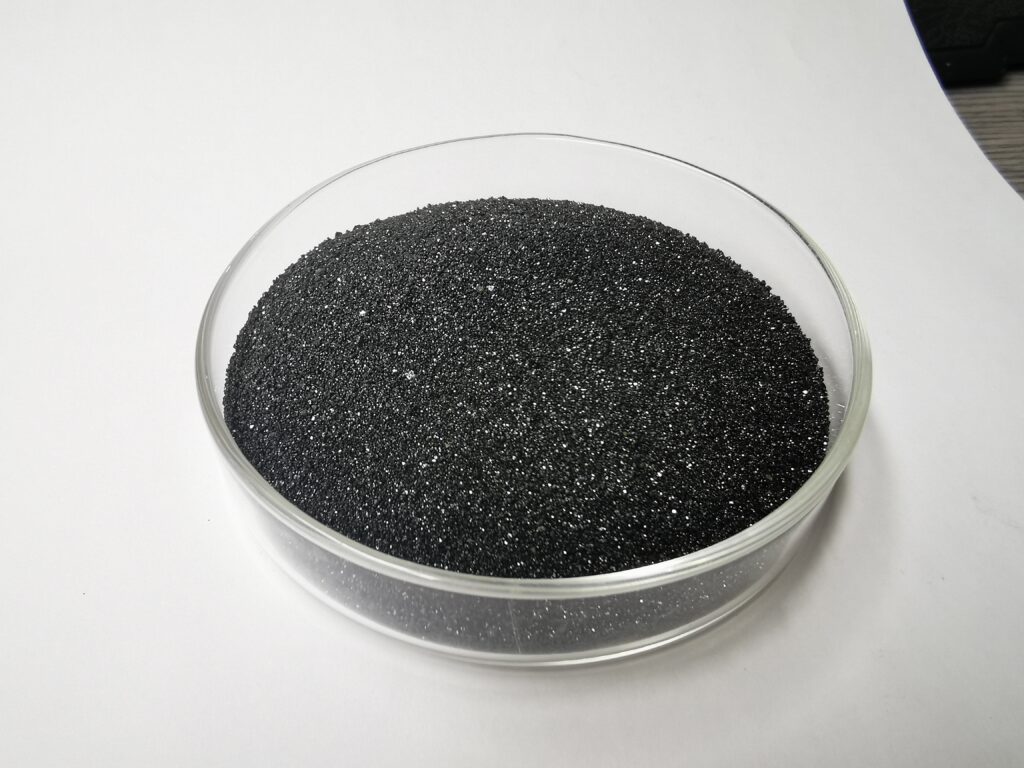
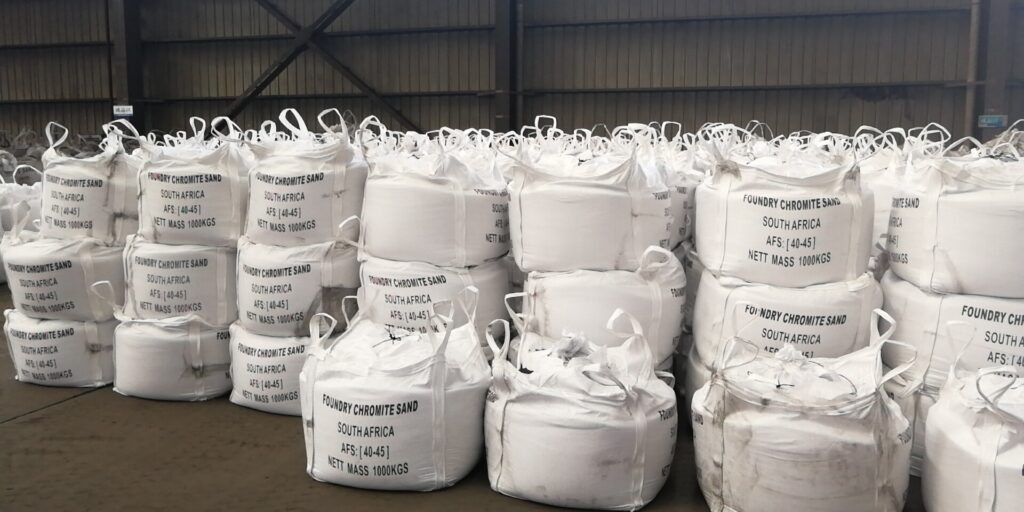
Properties of the chromite sand
Exceptional Refractoriness
Very high melting point (~2180°C), significantly higher than the pouring temperature of even ultra-high-alloy steels. This provides an excellent thermal barrier, preventing mold wall collapse and metal penetration.
High Thermal Conductivity (The “Chilling Effect”)
- Its primary metallurgical benefit. It draws heat away from the solidifying casting 2-3 times faster than silica sand. This promotes:
- Finer grain structure and improved mechanical properties (tensile strength, impact toughness).
- Directional solidification in critical sections, reducing shrinkage porosity.
- Faster solidification rates, which can improve productivity.
Low Thermal Expansion
Exhibits minimal linear expansion (<1%) when heated. This drastically reduces veining, rat-tails, and buckling defects caused by silica sand’s high expansion (up to 1.5%).
Chemical Inertness (Basic Nature)
- Neutral to both acidic and basic steel alloys. It resists wetting and chemical reactions with molten steel, especially beneficial for casting:
- Manganese steels (e.g., Hadfield steel)
- High-chromium steels (e.g., stainless steels, duplex steels)
- Other alloy steels prone to forming sticky, adherent oxides (like manganese oxide) that fuse with silica sand.
High Density (4.0 – 4.8 g/cm³)
Provides excellent mechanical stability against metal static and dynamic pressure, reducing mold wall movement.
Applications in Steel Casting
Chromite sand is rarely used as 100% molding sand due to cost. Its use is strategic:
Facing Sand (Most Common Application): A layer (typically 25-100 mm thick) of chromite sand is placed against the pattern, backed by cheaper silica or olivine sand. This protects critical mold surfaces.
Cores for Heavy Sections: Used in cores for thick steel sections (like hub zones of valves or gear blanks) to promote rapid solidification and soundness.
Chills Replacement: Can act as an “insulating chill” to control solidification in complex geometries where iron chills are impractical.
Problem-Solving in Problem Areas: Applied in mold areas prone to burn-on, penetration, or veining defects when using silica sand.
Key Advantages for Steel Foundries
Superior Casting Surface Finish: Minimizes burn-on, metal penetration, and fusion defects, reducing extensive cleaning and grinding.
Improved Dimensional Accuracy: Low expansion reduces casting shift and deformation.
Enhanced Casting Soundness: The chilling effect minimizes shrinkage defects in heavy sections.
Compatibility with Reactive Alloys: Enables the production of high-integrity castings in manganese and chromium steels that are problematic with silica sand.
Potential for Improved Yield: By reducing shrinkage defects, overall yield can improve.